A professional overview of historical land tenure and revenue systems in India.
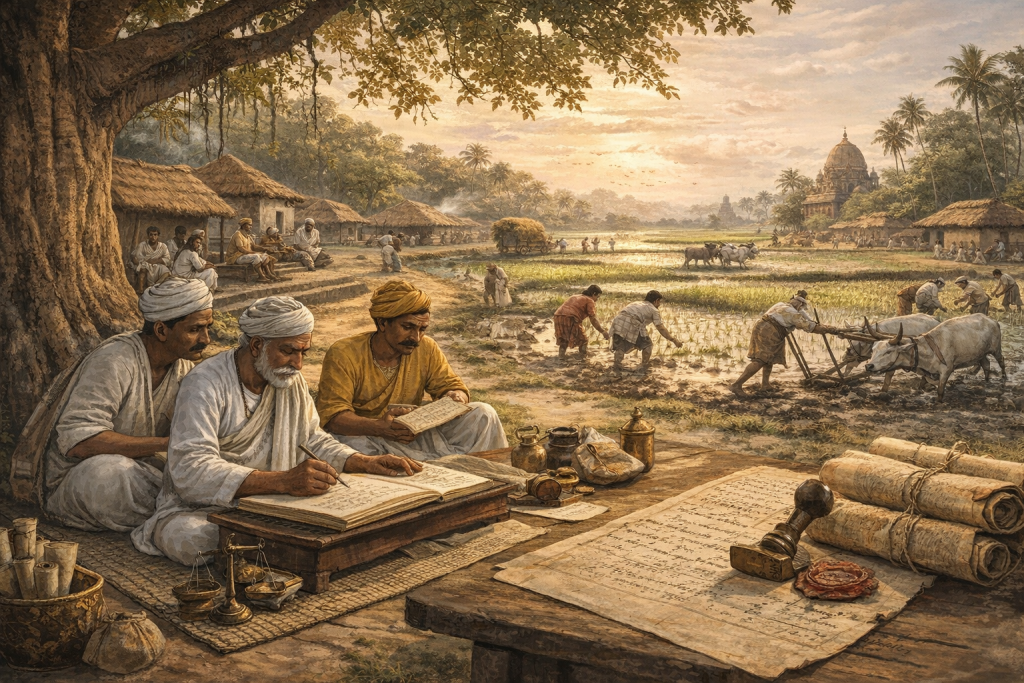
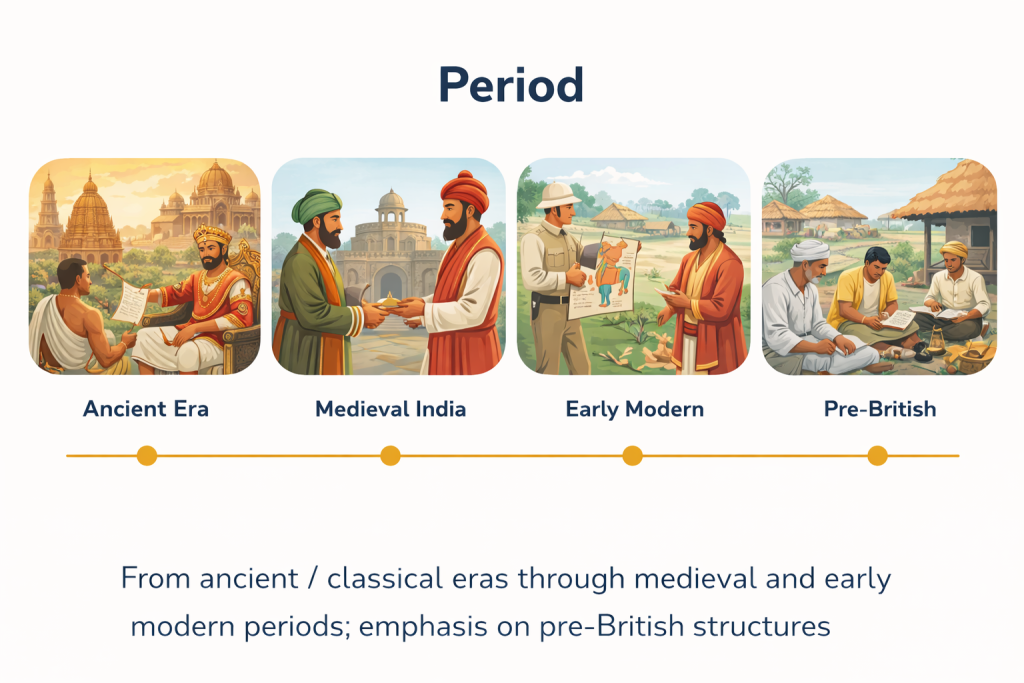
The systems of land tenure and revenue administration in the Indian subcontinent evolved over centuries. They combined customary rights, royal grants and administrative rules to shape how land was held, taxed and transferred. This page summarises the major ancient systems, explains their legal and social features, and provides references for deeper study.
Major Land Systems & Tenures
Zamindari
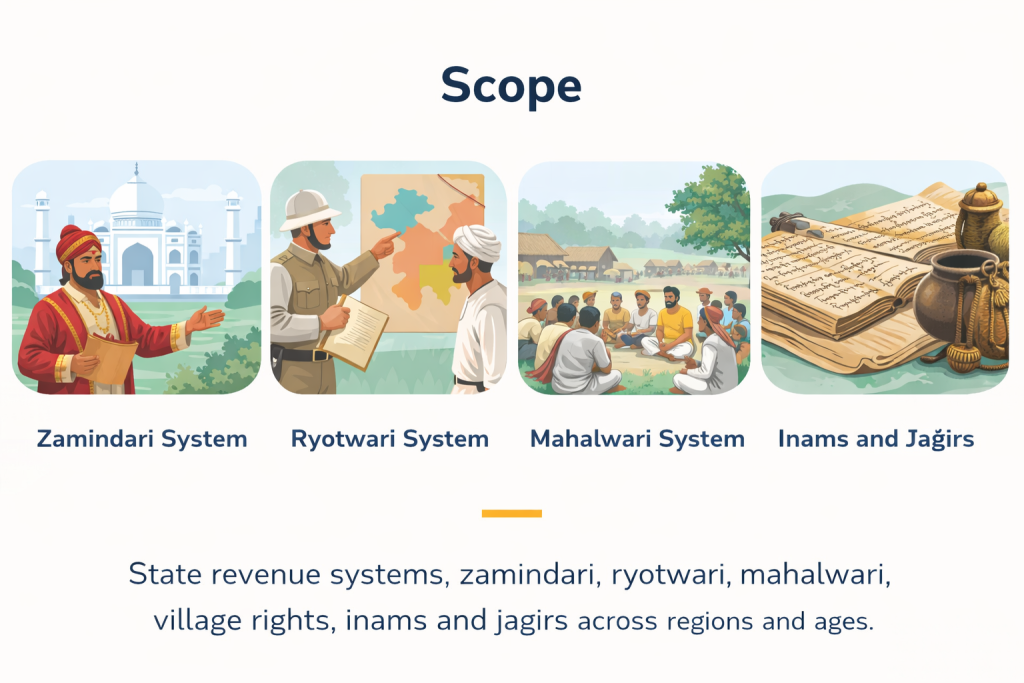
The zamindari system involved large intermediaries (zamindars) who collected revenue from peasants and paid a fixed or assessed sum to the state. In many areas zamindars held proprietary or near-proprietary rights over land; they often exercised administrative and judicial powers locally.
Mahalwari (Village-Based)
The mahalwari system identified land-holding groups (mahal/village) collectively responsible for revenue. It combined village community responsibility with administrative assessment. Variations existed; under British rule mahalwari settlements were used in parts of the north and Punjab region.
Ryotwari
Ryotwari recognised the cultivator (ryot) as the primary taxpayer. The government assessed and collected revenue directly from individual cultivators. This system was used in Madras Presidency, Bombay Presidency and parts of the Deccan, and emphasised individual holdings rather than intermediaries.