
Mughal Period
The Mughal Empire established a centralized and systematic revenue administration framework that significantly shaped India’s agrarian structure. Revenue was the principal source of state income, and land measurement and classification were carried out meticulously.
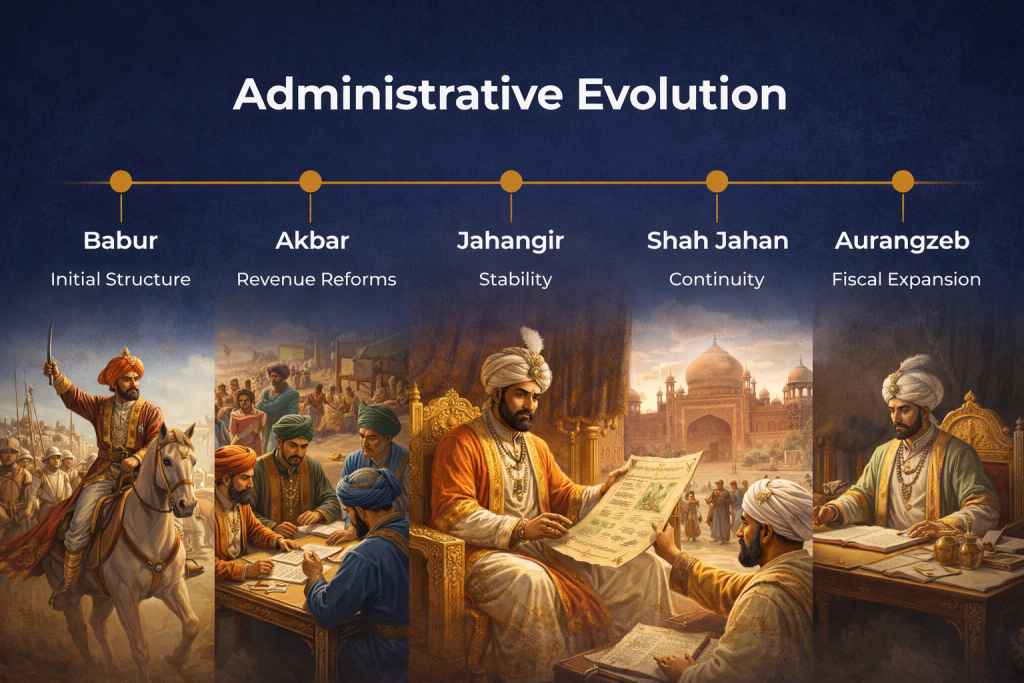
Under Akbar, Raja Todar Mal introduced standardized measurement (Zabt system), classification of lands based on fertility, and average produce calculations for revenue assessment.
Key Feautres
Zabt System
Standardized land measurement and productivity-based revenue assessment introduced under Akbar.
Jagirdari System
Revenue assignments granted to mansabdars instead of cash salary.
Village Administration
Amil, Qanungo and Patwari maintained detailed revenue records.
Land Adminstration Structure
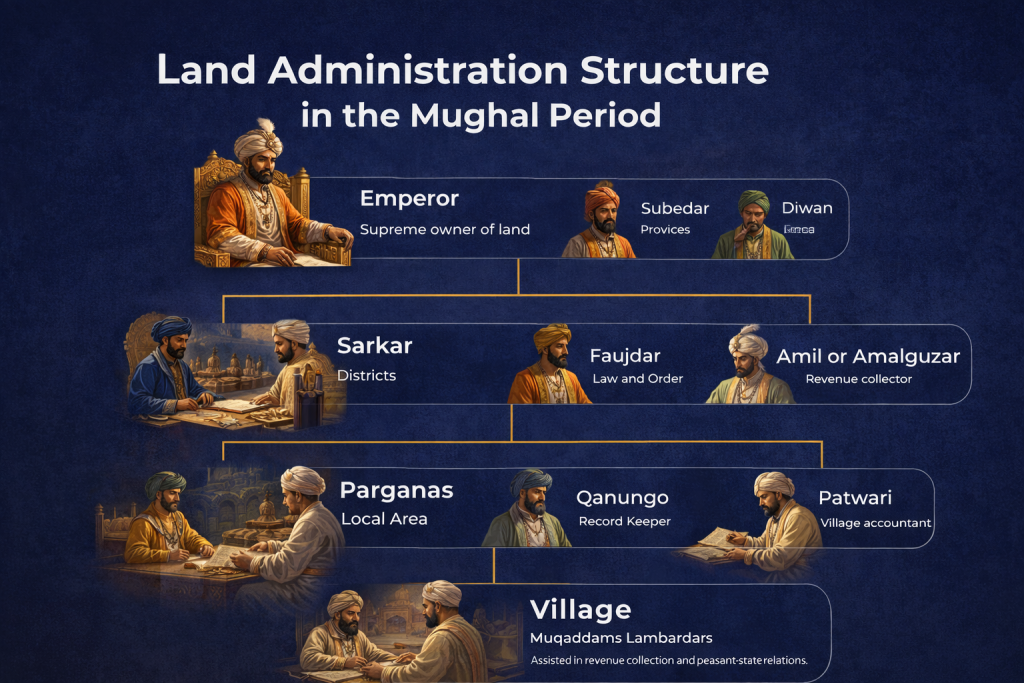
The Mughal Empire developed one of the most organized and systematic land administration frameworks in medieval India. The structure was highly centralized, yet efficiently implemented through provincial and local officers. Land revenue formed the backbone of the empire’s economy, and therefore, accurate measurement, classification, and record maintenance were given utmost importance.
At the district level, known as Sarkar, officials such as the Faujdar (law and order) and Amil or Amalguzar (revenue collector) were responsible for implementing imperial policies. Further below were the Parganas, where local revenue officers including the Qanungo (record keeper) and Patwari (village accountant) maintained land records, crop details, and revenue registers.
The village remained the basic administrative unit. Village headmen (Muqaddams or Lambardars) assisted in revenue collection and acted as intermediaries between the peasants and the state. This multi-layered structure ensured accountability, systematic documentation, and steady revenue flow to the imperial treasury.