
Post-Independence Land Reforms
Constitutional Vision & Agrarian Justice
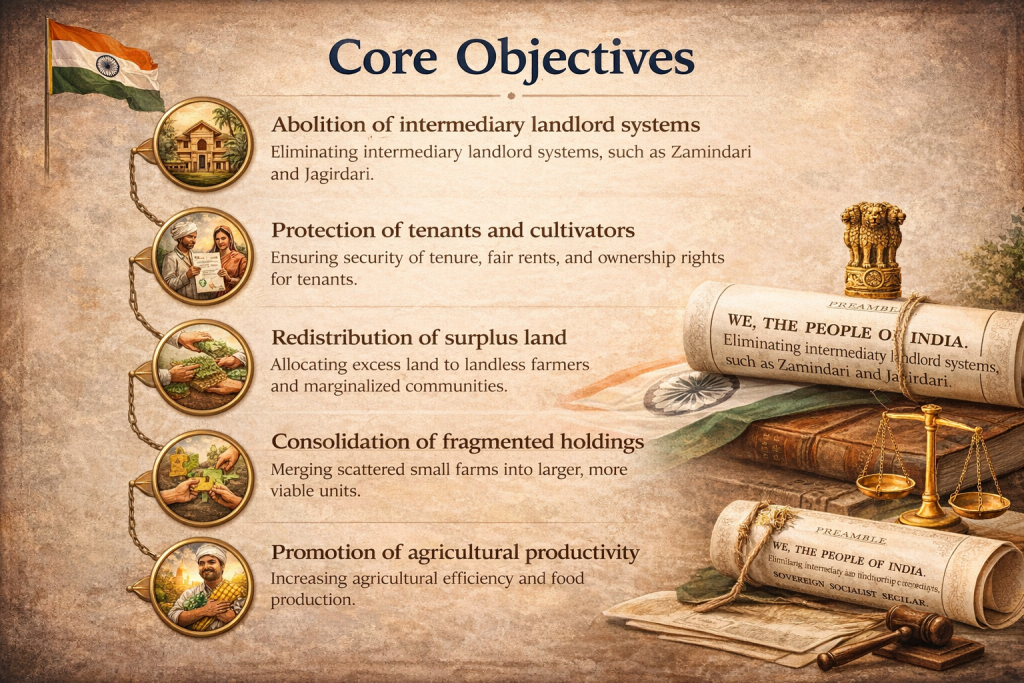
Following independence in 1947, India inherited deeply unequal agrarian structures
shaped by colonial land revenue systems. Concentration of land ownership,
absentee landlordism, and exploitative tenancy arrangements necessitated urgent reform.
Guided by the Directive Principles of State Policy under Articles 38 and 39, land reforms sought equitable distribution of resources and elimination of feudal hierarchies.

Impact on Modern Indian Land Law
Revenue Administration Reform
Strengthened state authority over land records, mutation procedures, and structured revenue governance mechanisms.
Tenancy Protection Framework
Established statutory safeguards ensuring rent regulation, security of tenure, and ownership pathways for cultivators.
Land Ceiling Jurisprudence
Judicial interpretation of ceiling laws shaped redistribution policies and clarified compensation principles.
Digitized Land Governance
Integration of cadastral mapping, online mutation systems, and e-governance platforms modernized land administration.